
You checked your website last Monday and found it sitting comfortably in Google's top five results. A few days later, it dropped to position nine. Before you panic, here's the good news: ranking fluctuations are a normal part of SEO.
Search rankings are constantly shifting as Google evaluates new content, changing user behavior, competitor activity, and countless other signals. The real question isn't why did my ranking change today? Is this change part of a bigger trend?
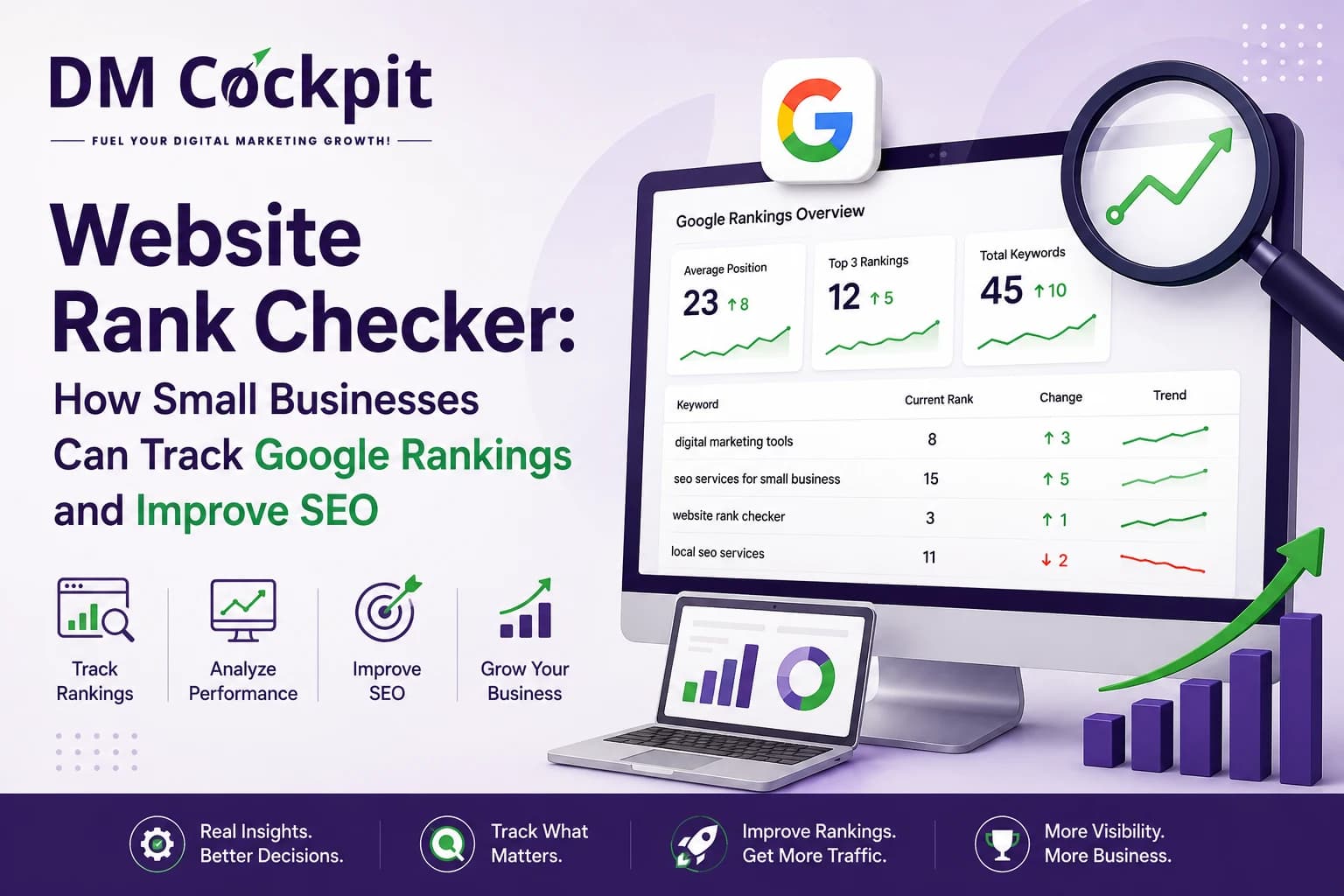
This is where a website rank checker tool can come in handy. It eliminates the need to search for your rankings repeatedly or just to guess them, allows you to keep tracking your rankings over time, identifies meaningful trends and patterns and optimizes your site smarter.
Let's examine in more detail why rankings shift and how to correctly monitor them which can enhance your SEO approach.
Why Search Rankings Never Stay the Same
Google's search results aren't static. Every day, millions of new pages are published, existing websites are updated, and search behavior evolves.
Several factors can influence your rankings, including:
- Google algorithm updates
- New competitor content
- Changes to your own website
- Fresh backlinks
- Search intent shifts
- Seasonal search trends
- Local search variations
- Mobile versus desktop results
Seeing your page move a few positions isn't unusual. In fact, small fluctuations often happen without requiring any action from your team.
The goal is to understand which changes are temporary and which deserve attention.
One Search Doesn't Tell the Full Story
Many website owners still check rankings by searching their target keyword on Google.
While it's quick, it rarely tells the whole story.
Your search results may be influenced by:
|
Factor |
How It Affects Results |
|
Location |
Different cities can display different rankings |
|
Device |
Mobile and desktop results often vary |
|
Search history |
Google personalizes results based on previous activity |
|
Language settings |
Rankings may differ across regions |
|
Search features |
AI Overviews, Maps, and featured snippets change page layouts |
This is why manually checking rankings can create unnecessary confusion.
A Google rank checker for website provides a more consistent view by tracking rankings objectively over time.
Not Every Ranking Drop Is a Problem
One of the biggest SEO mistakes is reacting to every ranking change.
Imagine your page drops from position 4 to position 6 for a day, then returns to position 3 a week later. Making major website changes during that short dip could actually do more harm than good.
Instead, ask questions like:
- Has traffic also declined?
- Did multiple keywords drop together?
- Are competitors improving?
- Has Google rolled out a major update?
- Is this happening across several pages?
Looking at the bigger picture helps separate normal fluctuations from genuine SEO issues.
What Should a Website Rank Checker Tool Actually Track?
Tracking rankings alone only tells part of the story.
A reliable website rank checker tool should also help you understand the context behind those numbers.
Look for features that monitor:
- Keyword rankings over time
- Historical performance trends
- Landing page visibility
- Competitor movement
- Search engine performance
- Changes across multiple locations or devices
- Overall keyword growth
When these insights are combined, ranking data becomes much more useful.
Why Businesses Outgrow Manual Tracking
Checking ten keywords manually might be manageable.
Checking one hundred?
Not so much.
Now imagine you're an agency managing multiple clients or a growing business tracking dozens of service pages.
Manual tracking quickly becomes:
- Time-consuming
- Inconsistent
- Difficult to organize
- Nearly impossible to compare historically
That's why businesses often move to a website ranking tracker that automates data collection and keeps everything in one place.
Rankings Are Only One Piece of SEO Performance
A page moving from position seven to five is encouraging, but rankings alone don't tell you whether your SEO efforts are succeeding.
Here are other metrics worth tracking alongside rankings:
|
Metric |
Why It Matters |
|
Organic traffic |
Shows whether rankings are driving visitors |
|
Click-through rate |
Measures how often users click your listing |
|
Search impressions |
Indicates overall search visibility |
|
Top-performing pages |
Highlights your strongest content |
|
Keyword growth |
Reveals expanding search opportunities |
Looking at these metrics together provides a much clearer understanding of your website's performance.
Common Reasons Websites Lose Rankings
If rankings decline over a longer period, there is usually a reason behind it.
Some of the most common causes include:
Competitors Published Better Content
SEO is competitive. When others improve their content, your rankings may shift even if you haven't changed anything.
Search Intent Has Changed
Google constantly refines results based on what users expect to find.
Content that matched search intent last year may not fully satisfy users today.
Website Changes Created New Issues
Redesigns, page updates, broken links, or technical problems can all influence rankings if they affect the user experience.
Content Has Become Outdated
Statistics, examples, screenshots, and recommendations naturally become outdated.
Refreshing existing pages can help maintain relevance over time.
How Professional SEO Teams Monitor Rankings
Experienced marketers don't check rankings once and make immediate decisions.
Instead, they build a process.
A typical workflow looks like this:
- Track important keywords consistently.
- Review weekly and monthly trends.
- Compare competitor movement.
- Analyze traffic alongside rankings.
- Identify pages that need optimization.
- Measure improvements after updates.
This systematic strategy results in more effective long-term SEO choices rather than taking action based on single rankings.
Choosing the Right Keyword Position Tracking Software
Not all tracking tools offer the same value.
When you're reviewing keyword position tracking software, take into account the software's ability to answer actionable questions such as:
- Which keywords are steadily improving?
- What pages need greater search visibility?
- How have rankings changed over the last 3 months?
- Which competitors are gaining ground?
- What SEO strategies worked and brought about measurable results?
The most effective tools are not only those that gather data, but they also provide insight into the data.
Turn Ranking Data Into Action
If ranking reports aren't opened, they shouldn't remain in your inbox.
Rather, use them as signposts to help you figure out what comes next.
For example:
- Update pages that have slowly declined.
- Optimize for keywords that are just beyond the top page.
- Find pages that are successful and deserving of more content.
- Keep an eye on competitor successes and prevent them from becoming losses.
The value of tracking only comes when it benefits to making better decisions.
Smarter Tracking Leads to Smarter SEO
The search landscape is never static, so search rankings will continue to change. Don't focus on the little movements, but instead on the general direction of the numbers.
With a solid tracking strategy in place, you can be sure that you're making the right decisions, focusing on the areas that need improvement, and accurately assessing the results of your SEO campaigns over time.
At DM Cockpit, we believe that SEO is simpler to handle as soon as your rankings, performance statistics, and marketing insights are centralized. If you are monitoring a few keywords or running campaigns on multiple sites, it's easier to have visibility and to spend more time growing than playing a guessing game.
Frequently Asked Questions
1. What is a website rank checker tool?
A website rank checker tool monitors where your webpages rank for selected keywords in search engines and tracks changes over time.
2. Why do my website rankings change so often?
Rankings can change because of algorithm updates, competitor activity, content updates, user behavior, search intent, and many other factors.
3. Is manually searching Google an accurate way to check rankings?
Not always. Personalized search results based on your location, device, and browsing history can make manual checks unreliable.
4. What is a website ranking tracker?
A website ranking tracker automatically monitors keyword positions and provides historical data to help evaluate SEO performance.
5. What is keyword position tracking software used for?
Keyword position tracking software helps businesses monitor keyword rankings, analyze trends, compare competitors, and measure the impact of SEO efforts.
6. Why is tracking rankings over time better than checking them occasionally?
Long-term tracking reveals meaningful trends, helping you distinguish between temporary fluctuations and genuine performance changes while supporting better SEO decisions.