
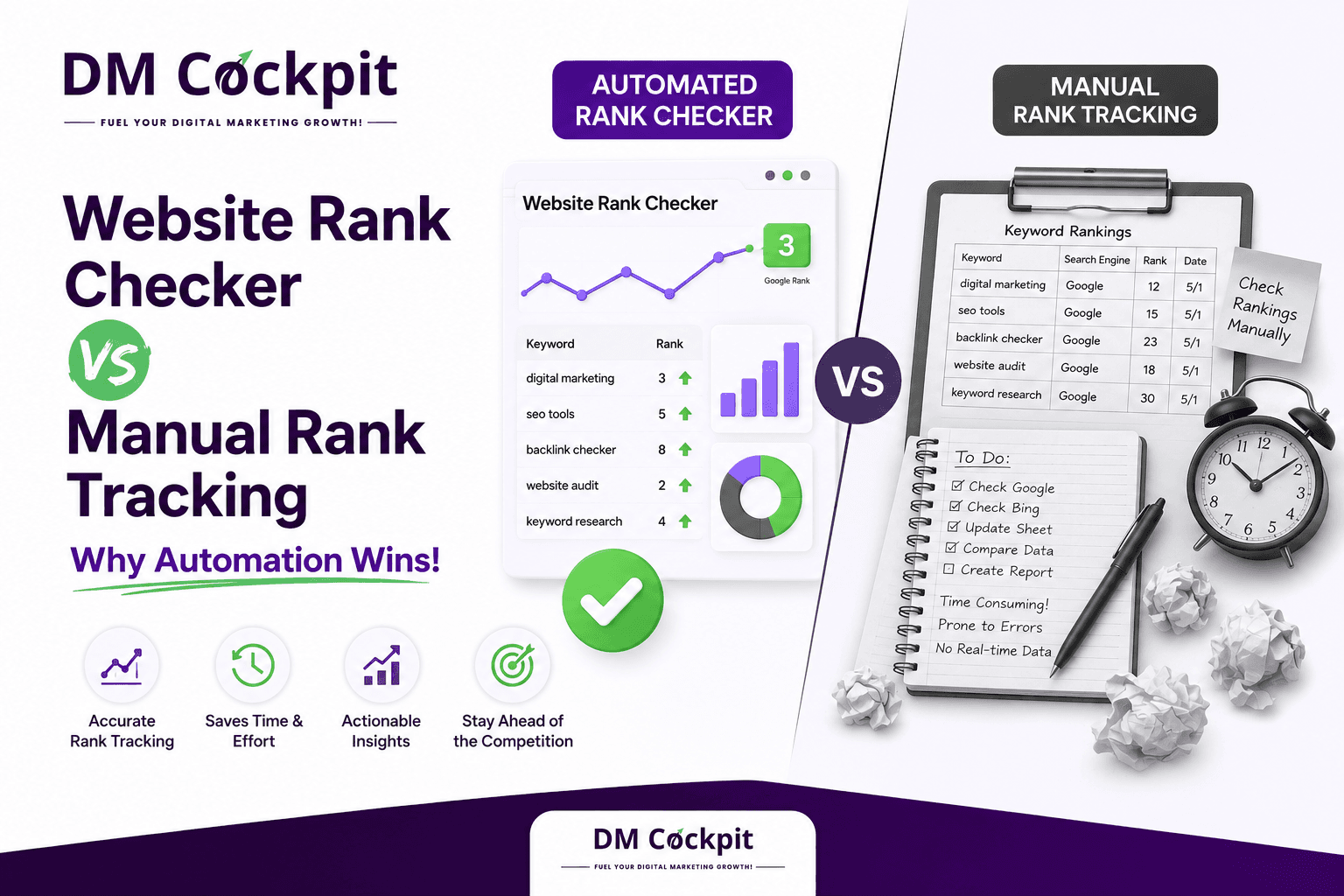
Every SEO campaign reaches a point where checking rankings manually starts taking longer than acting on the insights themselves. Teams jump between spreadsheets, analytics platforms, and search results trying to understand what changed. By the time the information comes together, valuable opportunities to respond may already have passed. That's why many businesses are replacing manual rank tracking with automated website rank checkers that provide faster, more reliable insights.
The reports provide some answers, but not the complete picture. One team member compares spreadsheets, another reviews analytics, while someone else manually checks keyword positions. By the time the information is pieced together, valuable time has already been lost.
This situation has become increasingly common as websites grow and SEO campaigns become more competitive. Rank tracking is no longer just about knowing where a keyword appears in search results. It has evolved into a continuous source of business intelligence that helps organizations identify changes early, respond with confidence, and make informed marketing decisions before performance begins to decline.
The Real Cost Isn't Checking Rankings. It's Missing Changes
Businesses rarely experience a sudden SEO failure overnight. More often, performance declines gradually, with small ranking changes accumulating over weeks before anyone notices.
An important service page might lose several positions for a valuable keyword. A competitor could strengthen their content while your optimization priorities remain unchanged. Local search visibility may begin slipping without triggering immediate concern. Individually, these changes appear manageable. Collectively, they influence traffic, inquiries, and revenue opportunities.
Delayed optimization decisions create another challenge. When marketing teams discover ranking shifts only during scheduled reporting cycles, opportunities to respond quickly have already passed.
Inconsistent reporting compounds the issue further. Different team members may rely on separate data sources, creating uncertainty about which information reflects actual performance.
At DM Cockpit, we believe businesses shouldn't have to wait until monthly reports to understand what's happening with their rankings. That's why we've built tools that surface important changes as they happen.
How One Ranking Drop Creates a Chain Reaction
Small ranking movements often trigger much larger business consequences.
|
Ranking Event |
Business Impact |
|
Keyword positions decline |
Search visibility decreases |
|
Lower visibility |
Organic traffic begins to fall |
|
Reduced traffic |
Fewer inquiries or qualified leads |
|
Fewer inquiries |
Missed revenue opportunities |
The earlier these changes are identified, the greater the opportunity to respond before they affect wider marketing performance.
Inside a Month of Manual Rank Tracking
Many businesses still rely on a monthly reporting cycle for monitoring rankings. While familiar, this approach often introduces delays that make optimization less responsive.
Week 1
The month begins with reviewing target keywords and updating spreadsheets. Priority pages are checked manually, and baseline rankings are recorded.
Week 2
Attention shifts towards competitor websites. Marketing teams compare ranking movements, review recently published content, and attempt to identify noticeable changes within search results.
Week 3
Internal reporting begins. Website performance is reviewed alongside analytics, requiring information from multiple platforms before meaningful discussions can take place.
Week 4
Monthly reports are finalized and presented during strategy meetings. Only now do larger ranking changes become obvious, even if they occurred several weeks earlier.
We've seen that reducing the time between identifying a ranking change and acting on it helps marketing teams stay ahead of competitors rather than reacting after performance has already declined.
The Shift From Monitoring Rankings to Monitoring Trends
At DM Cockpit, we designed our rank tracking tools to help businesses understand long-term visibility trends instead of focusing only on individual keyword movements.
Businesses now need to understand how search visibility evolves over time rather than relying on isolated ranking snapshots.
Visibility trends reveal whether overall search performance is improving or gradually declining.
Competitor movement helps identify emerging threats before they influence market share.
Landing page performance highlights which content deserves additional optimization and which pages consistently deliver results.
For businesses that want to target multiple regions or service areas, local ranking patterns can give insights.
Historical ranking data helps a marketing department to identify short-term changes from long-term changes.
Monitoring SEO momentum is also particularly important because it assists organizations in knowing if there is some continuous advancement being made in the optimization procedure or if just individual websites are enhancing their rankings.
The emphasis gets away from number collecting to insight into patterns that enable more informed decision making.
What Should a Modern Website Rank Checker Actually Tell You?
We believe reporting should answer business questions, when reporting evolves from raw data. That's why our platform focuses on actionable insights instead of isolated ranking numbers.
|
Instead of asking... |
Your platform should help answer... |
|
Did rankings change? |
Which pages experienced the biggest visibility changes? |
|
Which keyword dropped? |
What factors may have influenced the movement? |
|
How many keywords improved? |
Which opportunities deserve immediate attention? |
|
Is organic traffic changing? |
Which ranking trends are contributing to business performance? |
When reporting evolves from raw data into actionable insight, decision-making becomes significantly more efficient.
Business Maturity Model
Businesses often progress through several stages before rank tracking becomes a strategic advantage.
Level 1
Rankings are reviewed occasionally, often after traffic fluctuations become noticeable.
Level 2
Important commercial keywords are monitored consistently to maintain visibility across priority pages.
Level 3
Competitor performance becomes part of regular reporting, providing additional context for ranking changes.
Level 4
Reporting and notifications become automated, reducing manual effort while improving consistency.
Level 5
Ranking insights influence broader business decisions, helping marketing, content, and leadership teams prioritize growth opportunities based on current performance data.
Each stage represents greater operational maturity and stronger decision-making capabilities.
Why Automation Changes More Than SEO
Marketing Teams
Continuous rank tracking allows marketers to identify performance changes earlier, making campaign adjustments faster and more informed.
Content Teams
Content creators gain clearer visibility into which pages require updates, additional optimization, or entirely new supporting content.
Sales Teams
Improved visibility into organic performance helps sales teams better understand changing enquiry volumes and shifting customer demand.
Agency Account Managers
Standardized reporting and consistent performance updates improve communication with clients while making agency workflows more efficient.
Business Leadership
Reporting is no longer the only tool executives use to measure and comprehend digital performance. The ability to get real-time ranking trends helps in quicker strategic planning and informed investment decisions.
When every department works from the same reliable information, collaboration improves naturally.
From our experience, businesses achieve better SEO outcomes when their teams spend less time compiling reports and more time acting on reliable data.
Looking Beyond Keyword Positions
Businesses rarely lose search visibility because they lack marketing ideas or experienced teams. More often, they lose momentum because important changes remain unnoticed until rankings, traffic, and inquiries have already been affected.
A modern website rank checker supports a different way of working. Instead of relying on occasional reviews and fragmented reports, businesses gain continuous visibility into performance, allowing them to recognise opportunities earlier, respond to market changes more confidently, and make decisions based on current information rather than historical assumptions.
At DM Cockpit, we believe businesses should spend less time gathering ranking data and more time making confident SEO decisions. That's why we've brought rank tracking, competitor monitoring, analytics, automated reporting, and AI-powered insights together on one platform, helping teams respond faster to search changes and focus on long-term growth.
Frequently Asked Questions
1. What is a website rank checker?
A website rank checker is a tool that monitors how webpages rank for specific keywords in search engine results. It helps businesses track ranking changes over time and evaluate the effectiveness of their SEO efforts.
2. Why is automated rank tracking better than manual tracking?
Automated rank tracking provides consistent updates, historical data, competitor monitoring, and faster reporting. Manual tracking can become time-consuming and less reliable as websites, keywords, and campaigns grow.
3. How often should keyword rankings be checked?
For most businesses, keyword rankings should be monitored regularly. Automated tracking allows daily or scheduled updates, helping teams identify significant ranking movements without manually checking every keyword.
4. Can a website rank checker track competitors?
Many modern website rank checkers include competitor monitoring, allowing businesses to compare keyword performance, identify ranking changes, and understand how competitors are performing in search results.
5. What should businesses look for in a website rank checker?
A reliable website rank checker should provide accurate ranking data, historical performance trends, competitor tracking, automated reporting, local search monitoring, and actionable insights that support informed SEO decisions.
6. Is manual rank tracking still useful?
Manual rank tracking can still work for very small websites or businesses targeting only a few keywords. However, as SEO campaigns become more complex, automated tracking provides greater accuracy, scalability, and operational efficiency.