
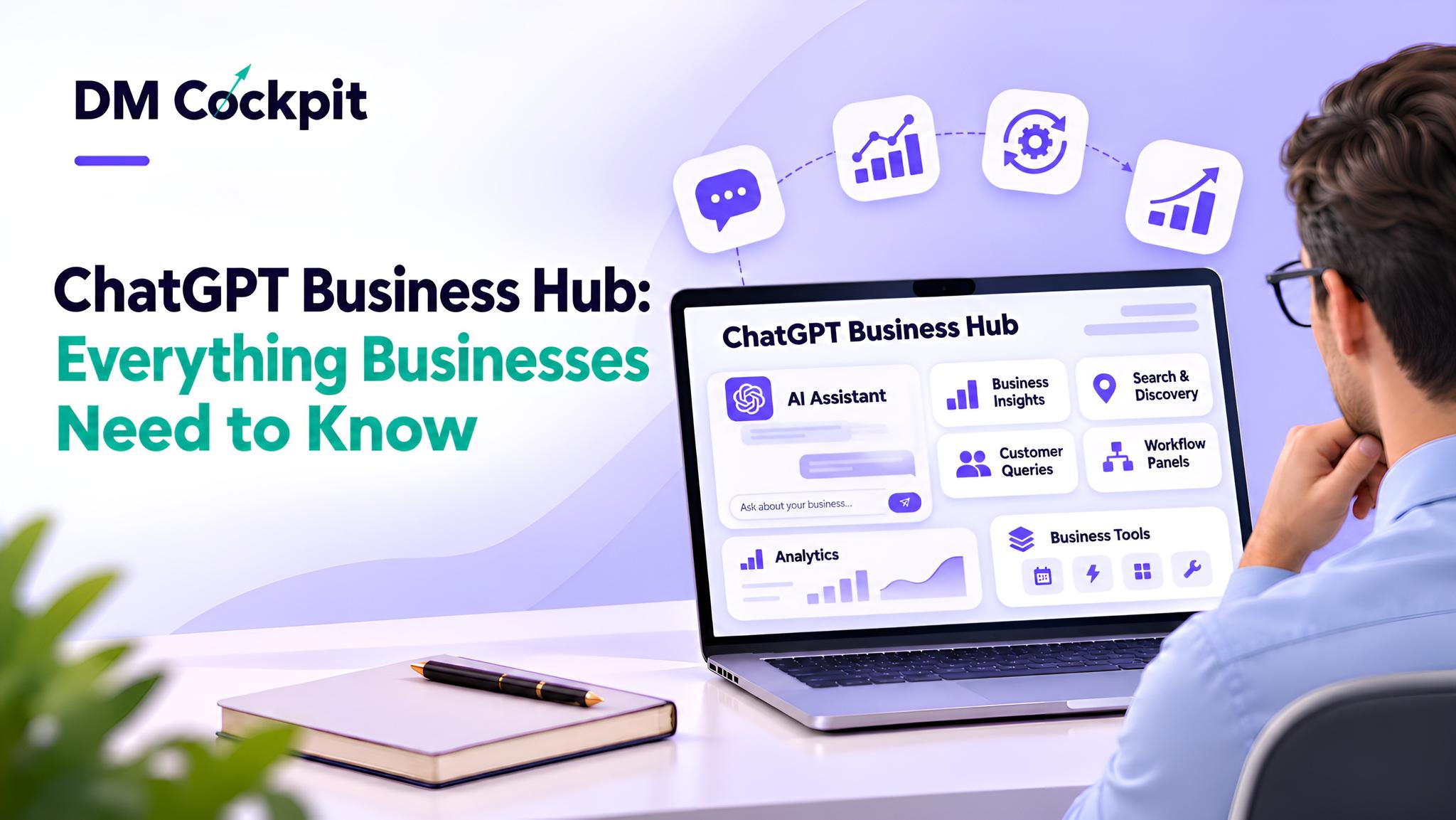
What Is ChatGPT Business Hub?
ChatGPT Business Hub is OpenAI's platform that allows eligible companies to claim and manage their business presence within ChatGPT. Introduced in November 2026, it gives businesses a way to update their information, share product details, access customer engagement insights and, where eligible, create AI-powered Business Agents.
The introduction of Business Hub marks another development in how people discover and interact with companies online. Customers are increasingly using AI assistants to research products, compare services, explore alternatives and make purchasing decisions.
For businesses, this creates an additional opportunity to reach potential customers through conversational discovery.
Previously, companies largely depended on search engines, business directories and their own websites to communicate their offerings. With Business Hub, eligible businesses can now provide information directly within ChatGPT and understand how users engage with their presence.
However, claiming a business profile does not guarantee recommendations, higher placement or sales. It gives businesses more control over their information and access to additional engagement insights.
What Are the Main Features of ChatGPT Business Hub?
OpenAI has introduced several capabilities to help businesses manage their information and interact with potential customers.
1. Business Profile Management
Businesses can claim an existing profile and, once the required verification is approved, update important information.
This includes:
- Business name and website.
- Business description.
- Product or service categories.
- Company logo and cover image.
- Delivery and return policies, where relevant.
Keeping this information accurate helps customers understand what a company offers when they discover it through ChatGPT.
2. Product Feeds and Availability Information
Retailers can connect product feeds containing information such as product names, descriptions, pricing and availability.
For example, an online electronics store can provide current product information so customers can explore available options when asking ChatGPT about laptops, smartphones or other devices.
Shopify merchants can connect their stores through Business Hub or Shopify's administration panel.
Connecting a product feed does not guarantee that ChatGPT will recommend or display every product.
3. Business Engagement Insights
Business Hub provides aggregated insights into how users discover and engage with a company through ChatGPT.
Businesses can access information such as:
- Mentions: How often ChatGPT references the business website or displays its local business result.
- Website clicks: The number of clicks from ChatGPT to the business website.
- Discovery topics: Common themes in conversations where the business website is mentioned or cited.
These insights help businesses understand which topics are associated with their offerings and where they may need to improve their information.
The insights cover aggregated activity over the previous 28 days. Businesses cannot access individual user conversations or customer prompts.
4. Business Agents
Business Agents are AI-powered assistants that eligible companies can configure to answer customer questions using information supplied by the business.
For example, an online clothing retailer could use a Business Agent to answer questions about:
- Product sizes and specifications.
- Available colours and styles.
- Delivery information.
- Return and exchange policies.
- Differences between product options.
Customers can interact with the agent to explore products and ask follow-up questions before deciding whether to purchase.
Business Agents are currently available to eligible ecommerce and online service businesses in the United States. They have separate eligibility requirements from business profile claiming.
How Can Businesses Benefit from ChatGPT Business Hub?
The value of Business Hub depends on how companies use its features and whether their target customers discover them through ChatGPT.
Here are some practical business opportunities.
Greater Control Over Business Information
Businesses can update supported information instead of relying entirely on details gathered from external sources.
This is particularly useful for companies that frequently change their offerings, product information, delivery policies or service descriptions.
Another Product Discovery Channel
For retailers, product feeds create another way to make product information available when customers research purchasing options.
A customer comparing two products can explore specifications, prices and availability through a conversational interface.
This creates an additional discovery opportunity alongside traditional ecommerce websites and search engines.
Better Understanding of Customer Interests
Discovery topics can help businesses understand the subjects associated with their products and services.
For instance, a software company may find that its website is frequently referenced in conversations about automation, reporting or customer management.
Such information can help its marketing team identify relevant content opportunities and improve the way it communicates its solutions.
However, discovery topics are aggregated themes, not a direct record of individual customer intent.
Opportunities for Customer Engagement
Eligible businesses with published Business Agents can give customers another way to ask questions and explore their offerings.
This may be particularly useful for businesses with detailed product catalogues or policies that customers frequently need explained.
It can make product research more interactive without requiring customers to navigate multiple website pages.
How to Claim Your Business on ChatGPT
Businesses can claim their profiles through Business Hub if they meet OpenAI's eligibility and verification requirements.
The process involves the following steps.
Step 1: Access Business Hub
Sign in to ChatGPT and open Business Hub from the sidebar. Search for your business by name.
Step 2: Select Your Business
Choose the correct business listing and confirm that you are using the ChatGPT account you want to manage it with.
Step 3: Verify Your Connection to the Business
Choose an available verification method. Depending on the listing, this may include:
- Business phone verification.
- Business email verification.
- Website domain verification.
- Shopify verification.
Step 4: Complete Identity Verification
After the initial claim is approved, complete the required identity verification through Persona.
You may need to provide identification and business information to establish that you are authorised to represent the company.
Step 5: Update Your Business Profile
Once the claim and identity verification are approved, you can update supported business information, add product feeds where eligible and access available insights.
OpenAI reviews submitted changes before publishing them. The time required for approval and updates may vary.
Is ChatGPT Business Hub Available in India?
Eligible businesses in countries where ChatGPT is available can claim their profiles, subject to business type, location and verification requirements.
This means Indian companies can check their eligibility directly through Business Hub rather than assuming that every feature is available to them.
There is an important distinction between profile management and Business Agents:
- Business profiles: Eligible companies in supported locations can claim their profiles if they meet the verification requirements.
- Business Agents: Currently restricted to eligible ecommerce and online service businesses in the United States.
OpenAI has indicated that it plans to expand Businesses in ChatGPT and Business Agents to additional markets and business categories.
For Indian companies, the practical first step is to check whether their business listing and verification options are available.
How Can Businesses Prepare for ChatGPT Business Hub?
Claiming a profile is only one part of building a strong presence within AI-powered discovery platforms.
Businesses should also pay attention to the quality of their websites, the accuracy of their information and how effectively they communicate their products and services.
Here are five areas worth reviewing.
1. Improve Website Content
Your website should clearly explain what your company offers, who it serves and what makes its products or services relevant.
Create detailed service pages, product descriptions and informational content that answers common customer questions.
Avoid vague descriptions and outdated information.
2. Maintain Accurate Business Information
Review your website, business directories and other online profiles regularly.
Check that your business name, website, contact details, product information and service descriptions are consistent.
3. Strengthen Technical SEO
Make sure important website pages are accessible to search engines.
Review indexing, broken links, page performance, metadata, mobile usability and structured data.
Before working on these issues, try out the DMCockpit Website Audit Tool to assess your website's health, identify technical SEO issues and find areas that need improvement.
4. Understand Search Demand
Research what potential customers are searching for and the questions they ask before choosing a product or service.
Include informational, commercial and long-tail keywords in your content strategy.
A keyword research process can help identify relevant topics and content gaps rather than relying on assumptions about customer interests.
5. Monitor Performance and Competitors
Track organic search performance, website traffic, ranking movements and competitor activity.
Once your Business Hub profile is verified, review its available insights separately to understand mentions, website clicks and discovery topics.
Combining these data sources gives marketing teams a broader view of how their business is performing across different discovery channels.
How DMCockpit Can Help Businesses Strengthen Their Digital Presence
ChatGPT Business Hub provides businesses with a new way to manage their information and understand how people discover them through ChatGPT. However, companies still need to maintain their websites, improve organic search performance and understand their competitive position.
At DMCockpit, we provide an integrated digital marketing platform that brings SEO, social media management, performance marketing and reporting capabilities together.
Our platform helps businesses and marketing agencies manage important digital marketing activities through a central dashboard.
Some of the capabilities that support this work include:
- Keyword Research: Identify relevant keywords, understand search demand and find opportunities for content development. Try our Keyword Research Tool to explore keyword opportunities for your website.
- Website Rank Checker: Monitor keyword positions and changes in organic search performance. Use our Website Rank Checker to track your website's keyword rankings.
- Website Audit: Identify technical SEO issues and areas requiring website optimisation. Try our Website Audit Tool to review your website's health.
- Competitor Analysis: Examine competitor keywords, organic performance and backlink opportunities. Explore our Competitor Analysis Tool to identify areas where your website can improve.
- Website SEO Checker: Review important on-page optimisation elements and identify opportunities to improve your website.
We also support the use of Google Analytics and Google Search Console data to help marketers understand website traffic and search performance.
DMCockpit does not claim business profiles on ChatGPT, manage Business Hub verification or guarantee AI recommendations. Our tools support the wider SEO and digital marketing work that businesses need to maintain a strong online presence.
As AI-powered discovery develops, having accurate business information, useful website content and a clear understanding of digital performance will remain important.
Explore DMCockpit and try our SEO tools to assess your website, track search performance and identify practical opportunities to strengthen your digital presence.
Frequently Asked Questions
1. What is ChatGPT Business Hub used for?
ChatGPT Business Hub allows eligible companies to claim and manage their business profiles, update supported information, connect product feeds and access aggregated engagement insights.
2. Can any company claim a business profile on ChatGPT?
Not every company is automatically eligible. Businesses must meet OpenAI's requirements relating to location, business type and verification. The available options can be checked through Business Hub.
3. Does claiming a business on ChatGPT guarantee better visibility?
No. Claiming a profile does not guarantee higher placement, recommendations or sales. ChatGPT continues to make independent recommendations using information from multiple sources.
4. Can businesses see who searched for them on ChatGPT?
No. Business Hub provides aggregated engagement insights. It does not reveal individual users, their personal information or their ChatGPT conversations.
5. Are ChatGPT Business Agents available in India?
Business Agents are currently available to eligible ecommerce and online service businesses in the United States. OpenAI has not announced a confirmed India rollout date.
6. Is ChatGPT Business Hub the same as Google Business Profile?
No. Both serve different purposes. Google Business Profile manages a company's presence across Google Search and Maps, while ChatGPT Business Hub allows eligible businesses to manage information and engagement within ChatGPT.
7. Can a business appear in ChatGPT without claiming its profile?
Yes. ChatGPT may reference business information from other sources even if the company has not claimed its profile. Claiming gives eligible businesses the ability to manage supported information and access available insights.